


Coordinating content across a distributed marketing team introduces problems a co-located team rarely deals with — time zone gaps, asynchronous approvals, and the constant risk of two people unknowingly working on the same campaign. A well-designed B2B editorial calendar solves this by building the remote reality into the structure itself, rather than trying to force a system built for in-office teams to work remotely.
This blueprint covers exactly how to structure a B2B editorial calendar for a distributed marketing team, from content stages to approval workflows that don’t depend on everyone being online at the same time.
Key Takeaways
- A B2B editorial calendar for remote teams needs to account for timezone gaps and asynchronous handoffs, not just content stages.
- B2B content typically requires longer production cycles than B2C, due to research depth, stakeholder review, and compliance needs.
- Clear async approval checkpoints prevent content from stalling while waiting on a single reviewer in a different timezone.
- Campaign-based organization works better than a simple content-type list for most B2B marketing teams.
- Documentation matters more for remote teams, since informal hallway clarifications simply don’t happen.
Why B2B Content Calendars Need a Different Structure
B2B content generally moves slower and involves more stakeholders than consumer content — a single whitepaper might require input from sales, product marketing, subject matter experts, and legal before it’s ready to publish. Add a remote, distributed team into that mix, and a B2B editorial calendar needs to solve two problems simultaneously: managing complex, multi-stakeholder content, and doing it without everyone working the same hours.
Step 1: Organize Around Campaigns, Not Just Content Types
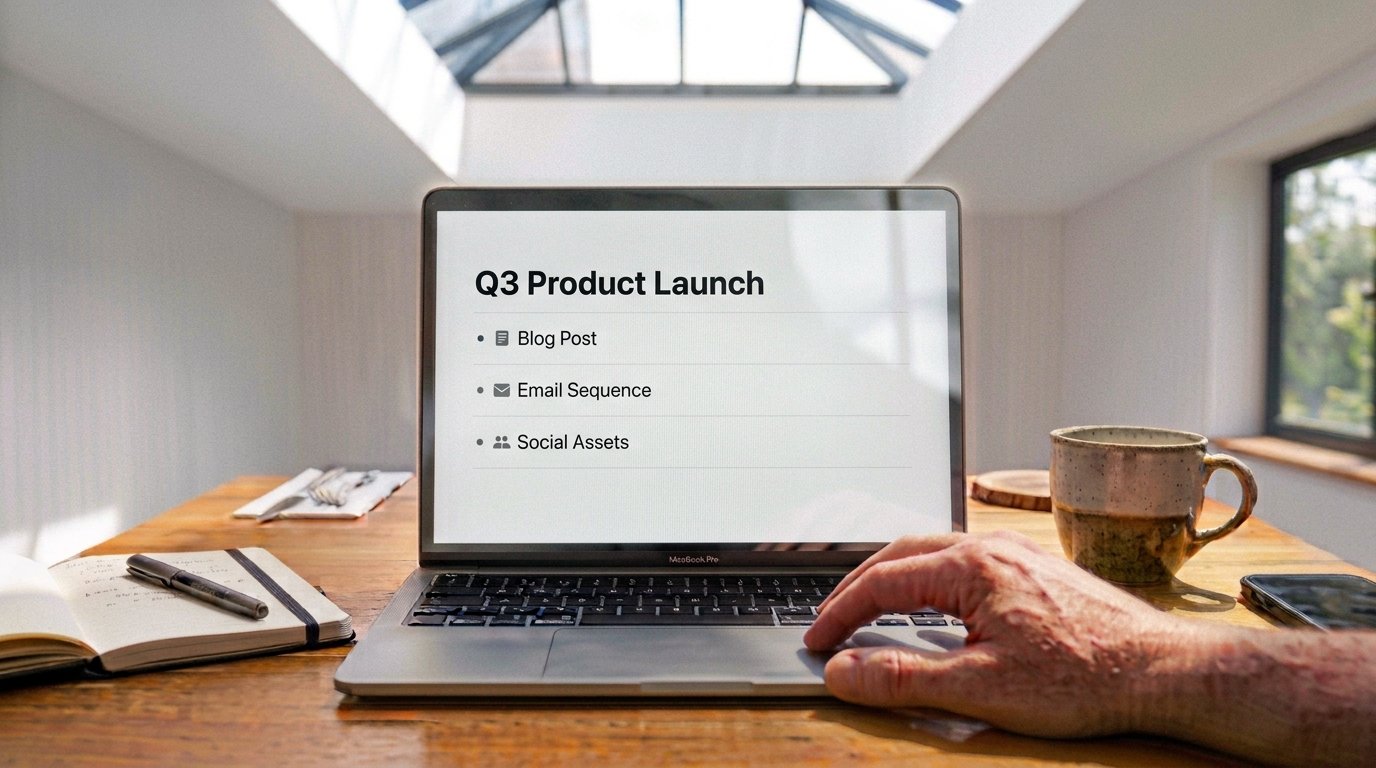
B2B marketing rarely produces standalone pieces of content — a single campaign typically spans a blog post, a gated whitepaper, an email sequence, and social promotion, all supporting the same goal.
H3: Campaign-Based Structure
Rather than tracking a blog post and an email as unrelated items, group them under a shared campaign identifier. This gives remote team members — who may not overhear campaign context in casual conversation the way an in-office team would — a clear view of how their individual piece fits into the bigger picture.
H3: What to Include Per Campaign
- Campaign name and goal
- All content assets tied to it (blog, email, social, gated content)
- Target launch date and any dependent milestones
- Assigned owners for each asset
Step 2: Build Stages That Reflect B2B’s Longer Production Cycle
B2B content typically requires more research and stakeholder input than a quick consumer blog post, and the calendar’s stages should reflect that reality rather than compressing everything into a generic five-step flow.
H3: Recommended B2B Content Stages
- Research & SME Input — gathering data, interviews, or subject matter expert contributions
- Drafting — writing the first version
- Stakeholder Review — routed to relevant departments (sales, product, legal) as needed
- Revisions — addressing feedback from stakeholder review
- Final Approval — sign-off from the content or marketing lead
- Scheduled — dated and ready for publishing
- Published & Distributed — live and pushed through promotion channels
Step 3: Design Around Timezones, Not Around a Single Workday
This is the piece most editorial calendar templates miss entirely, because they’re built assuming everyone works the same hours.
H3: Practical Timezone Accommodations
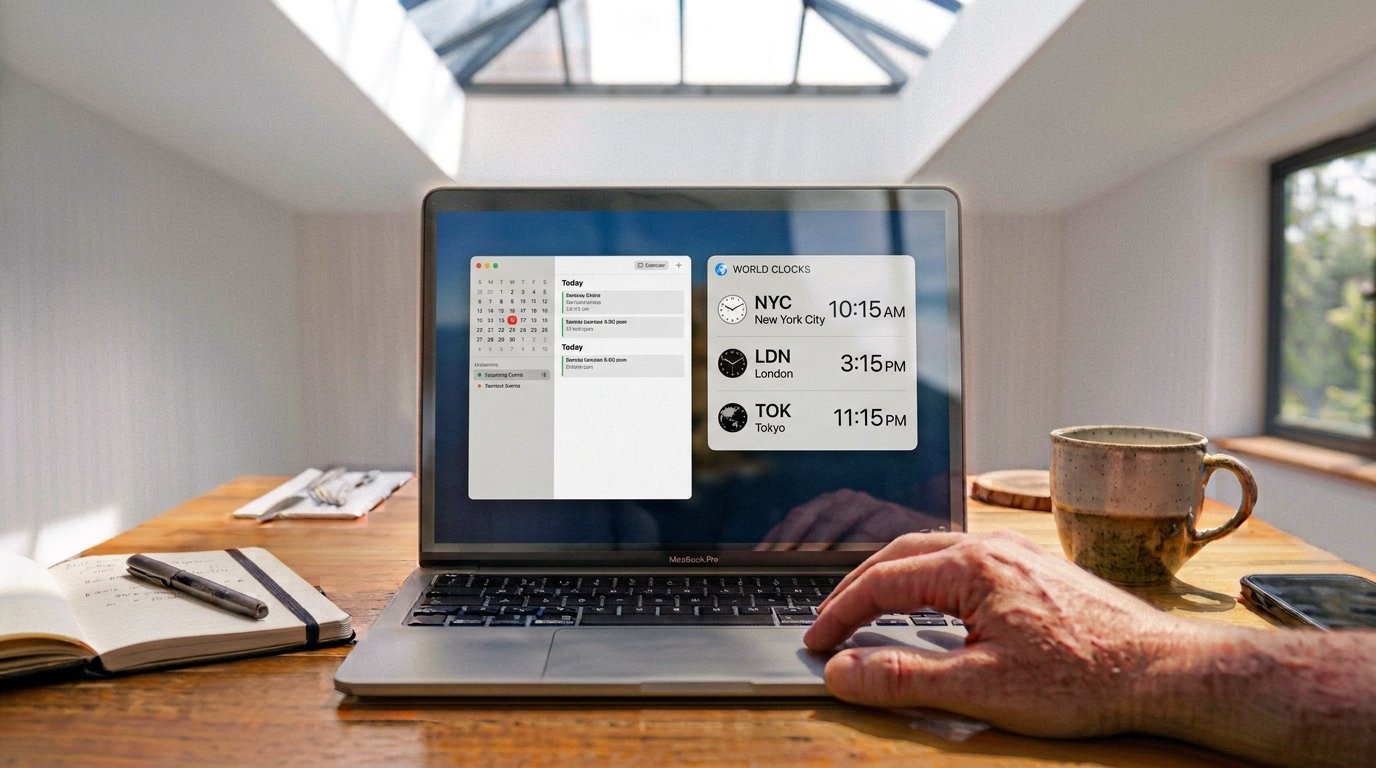
- Build in buffer days between each stage instead of same-day handoffs, so a reviewer in a different timezone isn’t the bottleneck.
- Assign a backup reviewer for time-sensitive approvals, so content doesn’t stall waiting for one specific person to come online.
- Note each team member’s working hours directly on the calendar or in a shared team reference, so deadlines account for realistic availability rather than assuming a 9-to-5 in one timezone.
H3: Avoiding the “Same-Day Approval” Trap
A calendar that assumes feedback happens within hours works fine for a co-located team, but breaks down the moment a stakeholder is eight hours ahead or behind the person waiting on their sign-off. Building a full day of buffer into each review stage prevents this from becoming a recurring bottleneck.
Step 4: Build Async-Friendly Approval Checkpoints
Approval bottlenecks are the single biggest risk to a remote B2B editorial calendar, since sign-off often depends on someone who isn’t online at the same time as the person waiting.
H3: How to Structure Async Approvals
- Use written, specific feedback left directly on the content (via comments or a shared doc) rather than requiring a live call for every round of review.
- Set a clear response-time expectation for each approval stage — for example, a 24-hour window rather than an undefined “whenever you get a chance.”
- Escalate automatically to a backup approver if the primary reviewer hasn’t responded within the agreed window.
Step 5: Document Everything Your Team Would Normally Say Out Loud
In an office, a quick clarifying question gets answered in seconds by turning around in your chair. Remote teams don’t have that option, so a B2B editorial calendar needs to carry more context directly within it.
H3: What to Document on Each Content Item
- The specific goal and target audience for the piece
- Brand voice or style notes relevant to that content type
- Links to research sources, SME interview notes, or previous related content
- A clear definition of “done” for each stage, so handoffs don’t require a follow-up question

Step 6: Choose Tools That Support Asynchronous Work
The right tool matters less than how it’s configured, but certain features genuinely help remote B2B teams specifically.
H3: Features Worth Prioritizing
- Comment threads on individual content items — so feedback stays attached to the exact piece it applies to
- Custom fields for stakeholder and timezone tracking — visible directly on the card without needing to ask
- Calendar views with buffer visibility — so gaps between stages are represented, not hidden
- Notification settings that respect quiet hours — reducing the pressure to respond outside someone’s actual working hours
Common Mistakes to Avoid
- Assuming same-day turnaround on approvals — this consistently breaks down across timezones.
- Organizing by content type instead of campaign — remote teams lose the bigger picture without campaign grouping.
- Under-documenting content briefs — remote teams can’t fill gaps with a quick hallway conversation.
- No backup reviewer for time-sensitive content — a single point of approval failure stalls the entire pipeline.
Conclusion
A well-built B2B editorial calendar for a remote marketing team isn’t just a standard calendar template applied to a distributed group — it’s a system deliberately designed around asynchronous handoffs, timezone-aware buffers, and documentation thorough enough to replace conversations that simply can’t happen in real time. By organizing around campaigns, building realistic B2B production stages, and creating async-friendly approval checkpoints, your team can move complex, multi-stakeholder content forward without anyone becoming a bottleneck just because of where they happen to be in the world.
FAQs
How is a B2B editorial calendar different from a B2C one? B2B editorial calendars typically need to account for longer production cycles, multiple stakeholder reviews, and campaign-based content groupings, whereas B2C calendars often move faster with fewer approval layers.
How do remote teams handle approval delays across timezones on an editorial calendar? Building in buffer days between stages, setting clear response-time expectations, and assigning backup reviewers all help prevent a single timezone gap from stalling the entire pipeline.
Should a B2B editorial calendar be organized by content type or by campaign? Campaign-based organization generally works better for B2B teams, since it keeps related assets like blog posts, emails, and gated content visibly connected to the same goal.
What should be documented on each item in a remote B2B editorial calendar? Target audience, content goal, source materials, and a clear definition of “done” for each stage help remote team members avoid delays from unanswered clarifying questions.
How far in advance should a B2B editorial calendar be planned? Most B2B teams plan at least one full quarter ahead, given the longer research and approval cycles involved, though monthly reviews help adjust for shifting priorities.
