


Staring at a blank screen every week trying to decide what to write is the primary cause of blogging burnout. Without a clear system, content creation becomes a chaotic, reactive chore rather than a strategic business asset.
Learning how to plan 30 days of blog content in under 2 hours shifts your approach from reactive guessing to structured execution. By batching your ideation and keyword mapping into a single time-boxed session, you build a high-performing publishing engine that saves dozens of hours every month.
Key Takeaways
- Time-Boxed Ideation: Allocating 120 focused minutes prevents decision fatigue and forces high-intent topic selection.
- Content Hub Model: Organizing 30 days of topics around 3–4 main content pillars creates strong topical authority for SEO.
- Batch Keyword Mapping: Validating search intent for 8–10 core articles at once streamlines the research phase.
- Template-Driven Workflows: Using a standardized editorial board turns raw ideas into publishing-ready article briefs instantly.
The 2-Hour Content Planning Framework
Trying to plan an entire month’s worth of posts without a structured framework usually leads to analysis paralysis. Divide your 120-minute session into four distinct 30-minute blocks:
[Min 0-30: Pillar Auditing] ──► [Min 30-60: Topic Mining] ──► [Min 60-90: Intent Mapping] ──► [Min 90-120: Calendar Setup]
Block 1: Pillar Selection (Minutes 0–30)
Define the 3 to 4 core themes your blog covers. If you publish twice a week, you only need 8 to 9 solid article ideas for a full 30-day cycle.
Block 2: Rapid Topic Mining (Minutes 30–60)
Extract low-competition keywords, competitor content gaps, and common reader pain points without editing yourself.
Block 3: Intent Validation (Minutes 60–90)
Match each raw topic idea with real user search intent and assign target primary keywords.
Block 4: Board Population (Minutes 90–120)
Plug your validated topics directly into your central editorial tool, complete with deadlines and basic outlines.
Step 1: Mine High-Intent Topics Rapidly (30 Minutes)
The secret to knowing how to plan 30 days of blog content in under 2 hours lies in fast, structured topic mining rather than starting from scratch.
- Customer Pain Points: Review recent support tickets, blog comments, or industry forum threads for recurring questions.
- Competitor Content Gaps: Identify high-ranking posts in your niche that lack detailed step-by-step instructions or updated data.
- Topic Clustering: Take one high-performing past post and break it down into four sub-topic ideas (e.g., turning a general “Trello guide” into individual guides on automations, checklists, and power-ups).

Step 2: Validate Keywords and Search Intent (30 Minutes)
Generating ideas is easy; ensuring those ideas actually rank requires validating search intent. Group your 8 to 10 selected topics into specific intent types:
| Search Intent Type | Purpose | Content Type Example |
| Informational | Answers “how-to” and educational queries | Step-by-step tutorials & beginner guides |
| Commercial | Helps users evaluate solutions | Tool comparisons & “best of” roundups |
| Transactional | Directs users toward immediate action | Product templates & actionable checklists |
Step 3: Map Out Your 30-Day Content Cadence (30 Minutes)
Once your topics are validated, sequence them strategically across the next four weeks.
Week 1: Pillar Article (High Volume)  ──►  Week 2: Supporting Tutorial (Informational)
Week 3: Tool Comparison (Commercial) ──►  Week 4: Actionable Checklist (Transactional)
- Alternate Content Types: Avoid publishing three complex technical tutorials in a row. Balance long-form guides with quick actionable checklists.
- Build Internal Linking Paths: Schedule supporting articles immediately after pillar posts so you can link them together as soon as they go live.
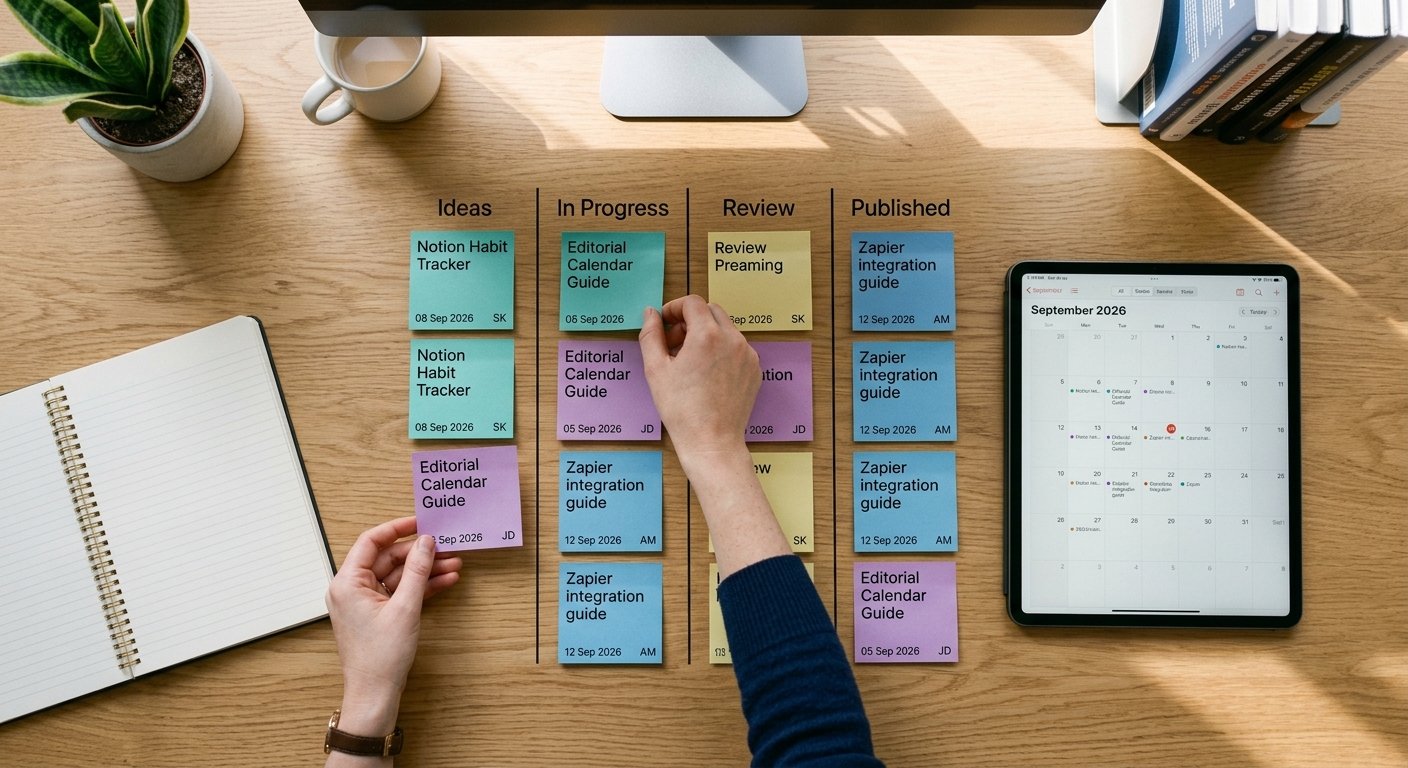
Step 4: Populate Your Calendar and Create Article Briefs (30 Minutes)
The final step in how to plan 30 days of blog content in under 2 hours is translating raw topics into complete content briefs inside your project management tool.
Never leave a calendar card with just a title. Include these three essential elements inside every card:
- Target primary keyword and 3–4 semantic NLP terms
- Clear target audience definition
- 3-sentence outline detailing the introduction, core solution, and call to action

Frequently Asked Questions
Is it really possible to plan 30 days of blog content in under 2 hours?
Yes. By separating the planning phase entirely from the writing phase, you eliminate contextual switching. Spending 120 minutes purely on ideation, intent mapping, and calendar population yields a full month of validated topics.
How many articles should I plan for a 30-day blog calendar?
For most solo bloggers and small teams, planning 8 to 10 high-quality articles (2 to 3 posts per week) is the optimal balance between maintaining high authority signals and avoiding burnout.
What is the best free tool to organize a 30-day blog schedule?
Trello, Notion, and Airtable offer robust free tiers that allow drag-and-drop card movement, custom calendar tags, and deadline tracking for lightweight editorial planning.
Executing a month of high-value publishing doesn’t require endless brainstorming. Once you master how to plan 30 days of blog content in under 2 hours, you turn blog management into a streamlined, predictable process that yields consistent search traffic.
